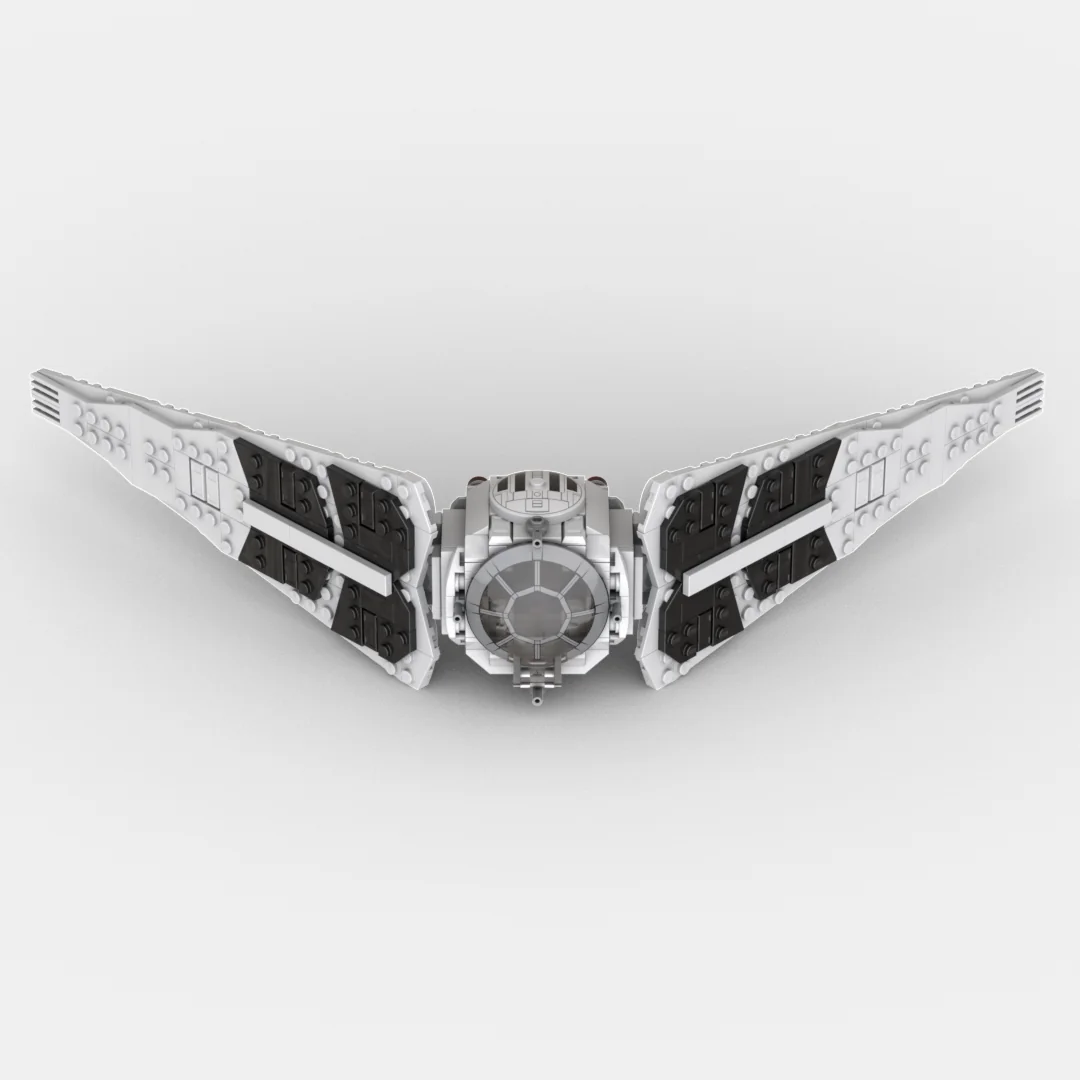
The Predator-class fighter, better known as the TIE Predator, represents a Legacy-era evolution of the classic Imperial TIE Fighter. Designed as a fast, front-line starfighter, it reflects how Imperial design philosophy adapted long after the fall of Palpatine’s Empire.
Building instructions and a complete parts list are available on Rebrickable for $5.
New to Rebrickable? It’s the marketplace for custom LEGO instructions. You purchase and download a PDF, then use the included parts list to source pieces through BrickLink or your preferred parts store. Here’s a step-by-step guide to ordering parts.
Origin, Design, and Specs
The TIE Predator emerged during the Legacy era, set roughly 130 years after the Battle of Yavin, as a primary front-line starfighter of the Fel Empire. Rather than being founded outright by Jagged Fel, the Fel Empire evolved over decades from Imperial remnants, ultimately led by the Fel dynasty and positioned as a successor state that preserved Imperial traditions while modernizing its military doctrine. Within the broader Star Wars timeline, this places the TIE Predator well after the Original Trilogy and New Republic era, during a renewed period of large-scale galactic conflict involving the Sith-controlled Galactic Alliance.
Visually, the TIE Predator departed sharply from earlier TIE designs. Its most distinctive feature is a pair of long, blade-like wings swept back at roughly 45°, capable of rotating farther aft to alter the ship’s combat profile and handling. The fighter also employed an unusual vertical docking system, hanging bat-like from launch racks rather than resting on a hangar deck. Unlike the original TIE Fighter, the Predator was equipped with both a hyperdrive and deflector shields, while its advanced control surfaces and wing articulation earned it a reputation as one of the most maneuverable fighters in the galaxy.
Creating the TIE Predator in LEGO
This v2 redesign features a reworked cockpit pod with improved proportions and closer alignment to Dark Horse comics illustrations, along with a fully detailed cockpit and flight controls that match the standard used across my other TIE variants. The wings have been completely redesigned for better shape and sturdiness, and the build is fully integrated into my Modular TIE Series using shared 3-pin Technic connections for mix-and-match compatibility.
Pieces: 357


Examples of the types of ships you can build using my modular TIE series:


Building Instructions
Bring the TIE Predator to life with step-by-step building instructions available on Rebrickable, designed to guide you cleanly from the cockpit pod to its distinctive swept, blade-like wings. The build emphasizes sturdiness and handling, with a detailed interior and a structure engineered for confident display or hands-on play. It is fully swooshable and built to feel like a true front-line starfighter rather than a fragile display model.
This build is part of my modular TIE series, designed to share a common scale and standardized connections between pods, wings, and other ship sections, allowing you to mix-and-match components freely. Whether you’re adding it to your fleet, creating a dramatic display, or crafting wild “Ugly” TIE Fighter mashups, these instructions make it easy to recreate this unique TIE variant in full detail.
67 pages, developed through a full physical test build. Includes a complete parts list for sourcing through BrickLink or your preferred parts store.
Role in Star Wars
The TIE Predator was created by artist Sean Cooke for the Star Wars: Legacy comic series, debuting in 2006 as part of the Legends continuity. Its design helped visually distinguish the Fel Empire from earlier Imperial forces, serving as a clear evolution of classic TIE aesthetics while reinforcing the Legacy era’s theme of a galaxy shaped by both tradition and transformation.


Star Wars: Legacy #0½ — John Ostrander & Jan Duursema (Dark Horse Comics, 2008)
Creator’s Note
Some images shown here belong to Lucasfilm Ltd. or other rights holders. They’re included to help illustrate design details and historical context of the Star Wars universe — shared here under fair use for commentary and educational discussion. All rights to original media remain with their creators.