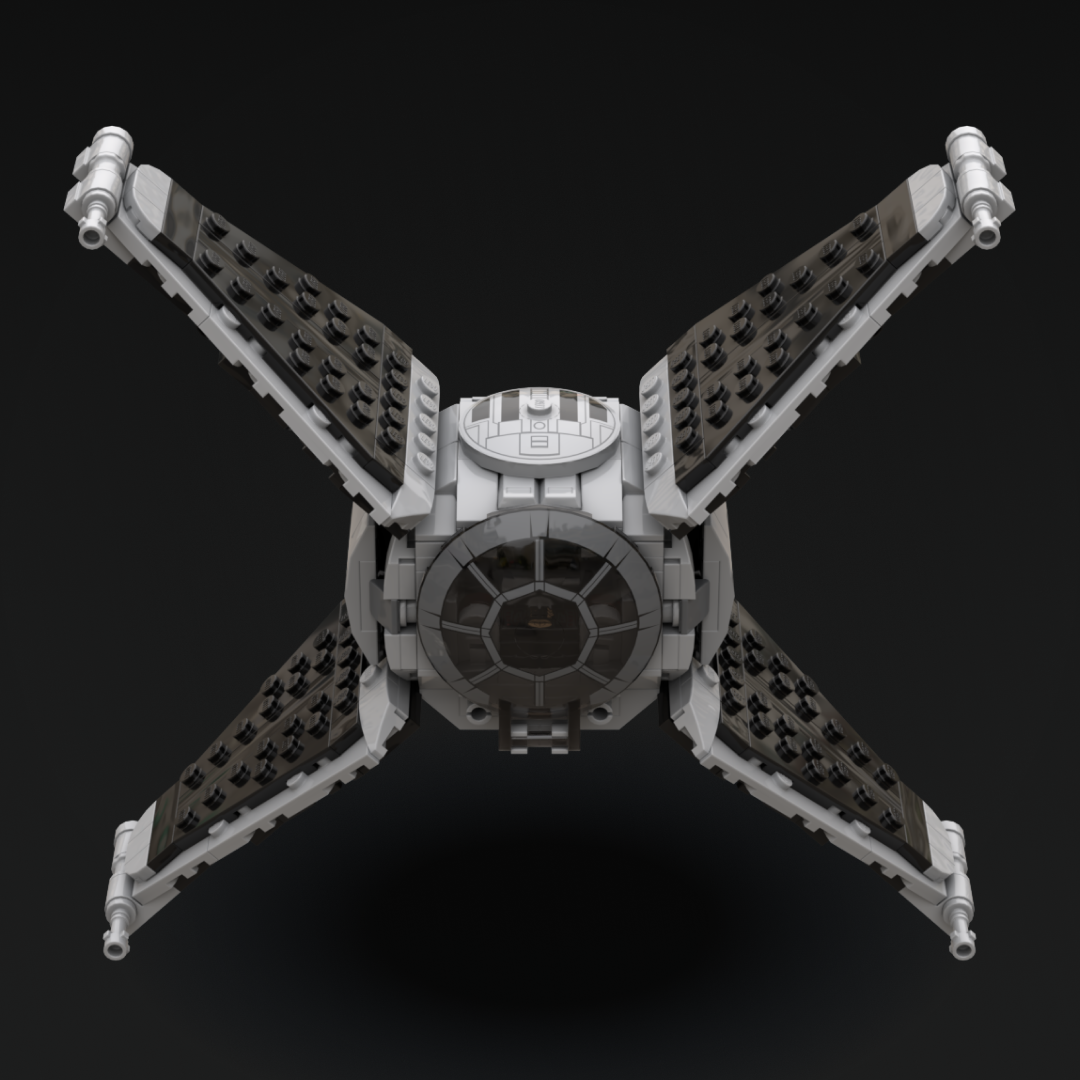
The TIE Raptor was a late–Galactic Civil War starfighter developed under the direction of Warlord Zsinj in the Legends continuity. Designed outside the traditional Imperial manufacturing system, it represents one of the more aggressive departures from standard Sienar Fleet Systems design.
Building instructions and a complete parts list are available on Rebrickable for $5.
New to Rebrickable? It’s the marketplace for custom LEGO instructions. You purchase and download a PDF, then use the included parts list to source pieces through BrickLink or your preferred parts store. Here’s a step-by-step guide to ordering parts.
Origin, Design, and Specs
Rather than originating from Sienar Fleet Systems, the TIE Raptor was constructed in a concealed shipyard positioned beyond the atmosphere of Dathomir, a location tied directly to Zsinj’s personal power base. This isolated facility allowed Zsinj to experiment freely, producing starfighters tailored specifically to his strategic needs without Imperial oversight. As a result, the TIE/rpt emerged as a custom craft rather than a mass-produced Imperial Navy starfighter.
Visually and mechanically, the TIE Raptor blended familiar Imperial elements with a compact four-fin configuration that emphasized agility and survivability. Its armament was notably heavy for a TIE-line craft, consisting of four laser cannons and two concussion missile launchers, giving it greater striking power than most contemporary variants. Maneuverability was comparable to that of the New Republic’s A-wing, making the Raptor especially dangerous in close-quarters dogfights. While it generally followed the unshielded TIE design philosophy, scattered sources suggest that a small number of shield-equipped prototypes may have been produced.
Creating the TIE Raptor in LEGO
This v2 MOC is a complete redesign of my original 2021 TIE Raptor, rebuilt for strength, display, and play. It features a sturdy structure that can rest on the lower wings, a fully detailed cockpit with flight controls, and compatibility with my Modular TIE Series using shared 3-pin Technic connections, allowing easy mix-and-match with other pods and wings, including the TIE Bomber.
Pieces: 389


Examples of the types of ships you can build using my modular TIE series:


Building Instructions
Bring this custom TIE Raptpr to life with step-by-step building instructions available on Rebrickable, guiding you from the fully detailed cockpit pod to the stubby, four-fin wings. The interior features complete flight controls, matching the standard used across my other TIE variants, while the overall ship is engineered for durability and confident handling. The finished model is sturdy enough to rest directly on its wings or display on a stand. It’s absolutely swooshable, built to be handled and enjoyed rather than just admired.
This build is part of my modular TIE series, designed to share a common scale and standardized connections between pods, wings, and other ship sections, allowing you to mix-and-match components freely. Whether you’re adding it to your fleet, creating a dramatic display, or crafting wild “Ugly” TIE Fighter mashups, these instructions make it easy to recreate this unique TIE variant in full detail.
85 pages, developed through a full physical test build. Includes a complete parts list for sourcing through BrickLink or your preferred parts store.
Role in Star Wars
The TIE Raptor was introduced in Cracken’s Threat Dossier (West End Games, 1997), placing it within the Expanded Universe. Its appearance in this sourcebook reflects its role as a specialized threat assessment asset rather than a front-line Imperial standard, reinforcing its status as a Legends-era starfighter tied closely to Warlord Zsinj’s independent war machine.

Cracken’s Threat Dossier — West End Games (1997)
Creator’s Note
Some images shown here belong to Lucasfilm Ltd. or other rights holders. They’re included to help illustrate design details and historical context of the Star Wars universe — shared here under fair use for commentary and educational discussion. All rights to original media remain with their creators.